Neurology & Psychiatry
1995
NINDS rt-PA Stroke Trial
In 624 patients, IV t-PA given within 3 hours of ischemic stroke made patients at least 30 percent more likely to have little or no disability at 3 months, despite symptomatic brain hemorrhage in 6.4 percent against 0.6 percent on placebo.
Key people
- NINDS rt-PA Stroke Study Group
- NIH-funded multicenter group that designed and conducted the trial
- John Marler
- NINDS program officer and principal organizer of the study
- Thomas Brott
- Cincinnati stroke neurologist, lead clinical investigator
- Joseph Broderick
- Co-investigator who contributed to trial design and hemorrhage analysis
Source
Before 1995, a physician managing acute ischemic stroke could offer supportive care, aspirin, and little else. Thrombolysis had been approached cautiously because early trials had high rates of intracerebral hemorrhage, but pilot studies suggested that t-PA helped when started within three hours of onset. The NINDS investigators bet on time: if the penumbra was the target, treatment had to arrive before it became infarct.
The National Institute of Neurological Disorders and Stroke funded a randomized, double-blind trial in two parts. Part 1, with 291 patients, asked whether rt-PA improved neurological status at 24 hours; part 2, with 333, tested outcomes at three months on four disability scales. All 624 patients received treatment within three hours of documented symptom onset, and the dose was fixed at 0.9 mg/kg intravenously. Concurrent anticoagulation was prohibited to limit hemorrhage risk.
Part 1 found no significant difference in neurological improvement at 24 hours, but the three-month data were clear, and part 2 confirmed them (global odds ratio for a favorable outcome 1.7). Patients who received rt-PA were at least 30 percent more likely to have minimal or no disability at 90 days across all four outcome measures: the National Institutes of Health Stroke Scale, the Barthel Index, the modified Rankin Scale, and the Glasgow Outcome Scale. The price was a symptomatic intracranial hemorrhage rate of 6.4 percent on rt-PA versus 0.6 percent on placebo. Mortality at three months was 17 percent with t-PA and 21 percent with placebo, a difference that was not significant.
The FDA approved intravenous rt-PA for ischemic stroke in June 1996, making it the first pharmacologic treatment for the condition. The approval created pressure on hospitals to reorganize; treating patients within three hours from symptom onset required rapid triage, immediate brain imaging, and stroke-team activation at all hours. Hospitals set up stroke teams and began tracking door-to-needle times.
Subsequent work refined patient selection. The ECASS III trial in 2008 extended the treatment window to 4.5 hours in selected patients. Later imaging-based trials, including DAWN and DEFUSE 3, published in 2018, used brain scans to find patients with salvageable tissue who benefited from clot removal by thrombectomy well beyond that window.
Keep exploring
 Read next · built on
First clinical CT scanner (EMI head scanner) (1971)
Treating within three hours required immediate brain imaging, and CT could tell a bleeding stroke from a blocked vessel. The CT entry shows the first scan of a patient in 1971.
Read this moment
Read next · built on
First clinical CT scanner (EMI head scanner) (1971)
Treating within three hours required immediate brain imaging, and CT could tell a bleeding stroke from a blocked vessel. The CT entry shows the first scan of a patient in 1971.
Read this moment
 Today on The Clinical Times
Florida dengue outbreak appears to be largest in continental U.S. in decades
Florida has reported more than 250 locally acquired dengue cases this year, with most in Hillsborough County, according to state health officials.
Read today’s top stories
Today on The Clinical Times
Florida dengue outbreak appears to be largest in continental U.S. in decades
Florida has reported more than 250 locally acquired dengue cases this year, with most in Hillsborough County, according to state health officials.
Read today’s top stories
All 526 moments in the history of medicine. This one is in chapter 6, Trials, scanners and rights
Connected moments
How this moment links to others in the history of medicine, and what you will find in each.
-
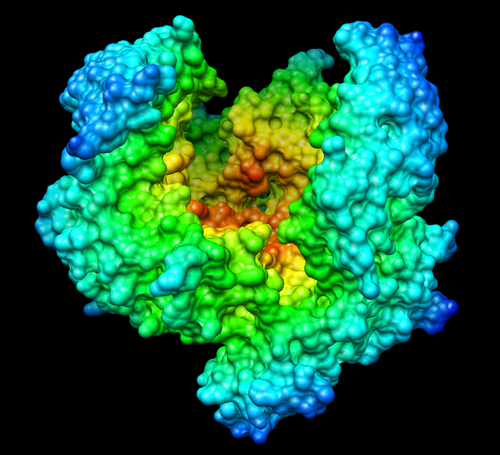 Same disease or problem1986GISSI-1 (Effectiveness of intravenous thrombolytic treatment in acute myocardial infarction)Both dissolved a blocking clot with a drug, first in the heart and then in the brain, and both found speed mattered most. The GISSI-1 entry shows streptokinase saving the most lives when given within three hours.Read this moment
-
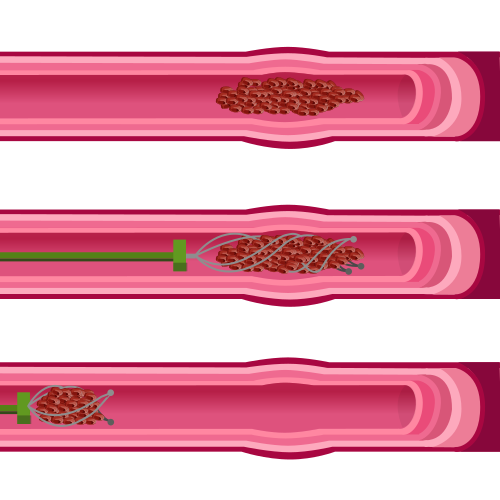 Same disease or problem2015Endovascular thrombectomy trials (MR CLEAN and HERMES)Clot dissolving drugs came first, and mechanical clot removal later proved to add benefit for large-vessel strokes. The MR CLEAN entry shows one patient helped for every 2.6 treated.Read this moment
-
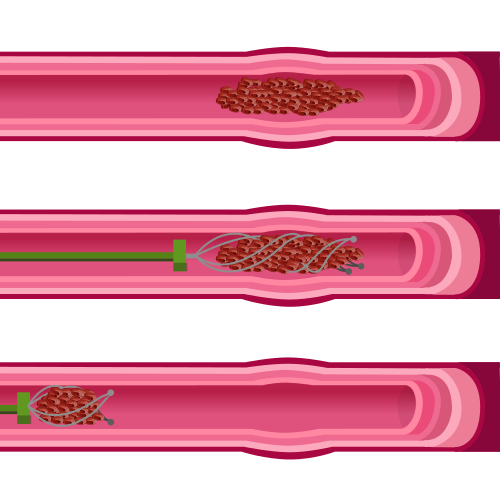 Same disease or problem2018DAWN: extended-window thrombectomyNINDS set a three-hour limit, and DAWN used brain scans to treat some patients up to 24 hours after stroke. Its entry shows thrombectomy reducing disability well past the old window.Read this moment